


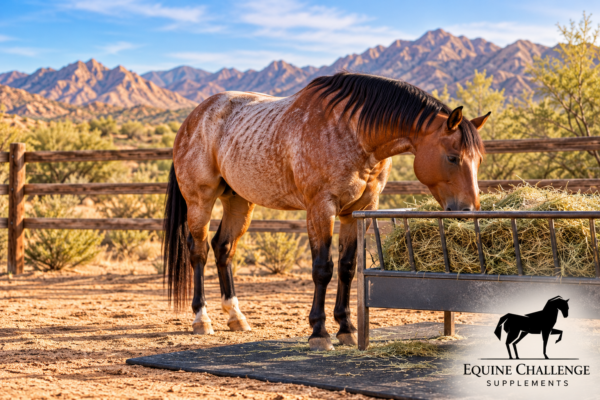
Preventing Sand Accumulation in Horses begins with understanding how sand enters the digestive system, recognizing potential warning signs, and implementing management practices that help reduce exposure.
For horse owners living in sandy environments, protecting digestive health involves more than providing quality hay and a balanced diet. One often-overlooked concern is the gradual accumulation of sand within a horse’s gastrointestinal tract.
Horses naturally graze close to the ground, making occasional ingestion of soil and sand difficult to avoid. However, horses living in dry lots, sandy pastures, desert regions, or areas with limited vegetation may be exposed to considerably more sand.
Over time, excessive accumulation can irritate the intestinal lining, interfere with normal digestive function, and potentially contribute to sand colic.
Fortunately, horse owners can take proactive steps to help reduce these risks.
What Causes Sand Accumulation in Horses?
Sand accumulation occurs when a horse ingests sand or soil that is not adequately eliminated through normal intestinal movement.
Although small amounts of sand may pass naturally through the digestive tract, larger quantities can settle in portions of the large intestine, particularly the colon.
As sand collects, its weight and abrasive nature can interfere with normal intestinal function.
Common Ways Horses Ingest Sand
Horses may accidentally consume sand through several everyday activities:
Eating hay directly from sandy soil.
Grazing short, sparse, or overgrazed pastures.
Picking up spilled grain or feed from the ground.
Eating around feeders where hay has fallen onto dirt.
Grazing in dry lots with little available vegetation.
Deliberately consuming soil, a behavior known as geophagia.
Even horses receiving excellent nutrition can ingest sand simply because of their environment.
Why Horses in Sandy Regions Face Greater Risks
Horses living in the Southwest, desert environments, and other sandy regions often face increased exposure.
Dry conditions, sparse vegetation, and loose soils can create an environment where horses regularly consume small amounts of sand along with their forage.
While not every horse living in a sandy environment will develop digestive problems, repeated exposure increases the importance of preventive management.
The goal is to reduce unnecessary sand ingestion before it becomes a digestive health concern.
What Happens When Sand Accumulates in a Horse’s Digestive Tract?
A horse’s digestive system is designed to process a steady supply of forage through a complex digestive process.
The hindgut, consisting primarily of the cecum and large colon, plays an essential role in fermenting fiber and utilizing nutrients.
Unlike forage, sand provides no nutritional value and cannot be digested.
When significant amounts settle within the large intestine, they can create several problems.
Intestinal Irritation and Inflammation
Sand is abrasive. When accumulated sand moves against the intestinal lining, it may contribute to irritation and inflammation.
Some affected horses develop loose manure or recurring diarrhea.
Interference With Normal Digestion
Heavy sand accumulation can disrupt normal intestinal movement and contribute to digestive discomfort.
In some horses, chronic intestinal problems may be accompanied by weight loss or difficulty maintaining body condition.
Increased Risk of Sand Colic
One of the most serious concerns associated with excessive sand accumulation is sand colic.
Sand colic occurs when accumulated sand contributes to intestinal discomfort, impaction, or obstruction.
Severe cases may require intensive veterinary treatment or surgery.
Because colic can become life-threatening, recognizing early warning signs is extremely important.

Warning Signs of Sand Accumulation in Horses
Sand accumulation does not always produce obvious symptoms during its early stages.
Some horses appear completely normal until intestinal irritation or an impaction becomes more significant.
Others may develop intermittent digestive problems that are easily mistaken for unrelated issues.
Common Symptoms to Watch For
Possible signs include:
Recurring episodes of mild colic.
Loose manure or unexplained diarrhea.
Weight loss or difficulty maintaining condition.
Reduced appetite.
Changes in manure consistency.
Abdominal discomfort.
Unusual lethargy or changes in behavior.
More severe signs of colic, including pawing, flank watching, repeated lying down, or rolling.
These symptoms can occur with several different digestive conditions and do not automatically indicate sand accumulation.
If your horse exhibits signs of colic, contact your veterinarian immediately. Do not attempt to treat suspected sand colic with supplements before receiving veterinary guidance.
How Can You Tell If Your Horse Has Sand in Its Intestines?
Horse owners sometimes use a simple manure sediment test to look for sand.
Although this method can reveal sand passing through the digestive tract, it has important limitations.
Understanding the Manure Sand Test
A commonly used method involves placing several fresh manure balls in a clear container or plastic glove with water.
After the manure breaks apart and the mixture settles, heavier sand particles may collect at the bottom.
Finding sand suggests that the horse is ingesting and passing some sand.
However, a negative manure sand test does not rule out significant accumulation inside the intestines.
A horse can retain sand in the digestive tract without passing enough in a particular manure sample to make the problem obvious.
How Veterinarians Diagnose Sand Accumulation
When sand accumulation is suspected, veterinarians may evaluate:
The horse’s environment and feeding practices.
History of colic, diarrhea, or weight loss.
Physical examination findings.
Abdominal sounds.
Fecal sand findings.
Abdominal radiographs or ultrasound, when appropriate.
Veterinary examination is especially important when a horse shows recurring digestive discomfort or persistent changes in manure consistency.
Preventing Sand Accumulation in Horses Through Better Feeding Practices
One of the most effective approaches to preventing sand-related digestive problems is minimizing the amount of sand a horse consumes.
Simple changes to feeding areas and daily management can make a meaningful difference.
1. Avoid Feeding Hay Directly on Sandy Ground
Placing hay directly on loose sand creates an opportunity for horses to consume sand with every mouthful.
Instead, consider using suitable hay feeders, feeding tubs, or clean rubber mats beneath feeding areas.
Mats should be large enough to catch dropped forage and should be cleaned regularly to prevent soil and sand buildup.
2. Maintain Adequate Forage Availability
Horses are natural grazers, designed to consume forage throughout much of the day.
When grazing is limited or pastures become overgrazed, horses may begin eating vegetation extremely close to the soil surface.
Providing adequate, good-quality forage can reduce the need for horses to search for every remaining blade of grass.
3. Keep Feeding Areas Clean
Sand can accumulate around feed tubs, hay feeders, and high-traffic areas.
Regularly remove spilled feed, manure, and debris.
When possible, position feeding stations on stable, well-drained surfaces that are easier to maintain.
4. Provide Clean, Fresh Water
Adequate hydration supports normal digestive function and intestinal motility.
Fresh water should always be available, especially when feeding dry hay or fiber supplements.
Although water does not directly flush accumulated sand from the intestines, maintaining proper hydration is an essential part of digestive health.
5. Evaluate Your Horse’s Overall Nutrition
A balanced diet supports normal digestive function, forage utilization, and general health.
If a horse regularly consumes dirt or soil, consider discussing the behavior and overall ration with your veterinarian or equine nutrition professional.
Not all soil-eating behavior indicates a mineral deficiency, and sand ingestion often occurs accidentally rather than because a horse is lacking a particular nutrient.
What Is Psyllium and How Does It Support Horses?
Psyllium is a natural soluble fiber derived from the husks of Plantago ovata seeds.
It has been used for years in equine digestive management, particularly for horses living in sandy environments.
How Psyllium Works in the Digestive Tract
Psyllium absorbs water and forms a gel-like material when hydrated.
This characteristic is one reason veterinarians sometimes incorporate psyllium into sand-management protocols.
The hydrated fiber may help support intestinal passage of ingested material.
However, research on the effectiveness of psyllium supplementation alone for removing accumulated sand has produced mixed results.
Psyllium should therefore be viewed as one component of an overall management program, rather than a guarantee against sand accumulation or colic.
Can Psyllium Prevent Sand Colic?
No supplement can guarantee prevention of sand colic.
Reducing environmental sand exposure remains one of the most important preventive strategies.
Veterinarians may recommend psyllium supplementation for horses with ongoing sand exposure, but the appropriate schedule and amount depend on the horse’s individual circumstances.
Psyllium supplements should never replace veterinary treatment for a horse experiencing colic or suspected intestinal impaction.
Supporting Digestive Health With Equine Challenge Sand Plus
For horse owners concerned about ongoing sand exposure, choosing a quality psyllium supplement may be part of a veterinarian-recommended digestive management program.
Equine Challenge Supplements Sand Plus combines premium blonde psyllium with added prebiotics to support digestive wellness.
What Makes Sand Plus Different?
Sand Plus features:
95% pure blonde Plantago ovata psyllium: A high-quality soluble fiber source.
Loose, granular psyllium: A non-pelleted formula that hydrates and develops its natural gel-like consistency when mixed with moisture.
FOS and MOS prebiotics: Ingredients included to support a healthy environment for beneficial intestinal microorganisms.
No unnecessary fillers: A straightforward formula designed for digestive support.
Made fresh: Consistent with the quality standards of Equine Challenge Supplements.
Sand Plus is intended to support digestive health as part of a comprehensive program that includes appropriate forage, hydration, improved feeding practices, and veterinary guidance.
How Often Should Horses Receive Sand Plus?
For an average 1,000-pound adult horse, Equine Challenge Sand Plus product directions describe feeding 2–4 ounces daily for seven consecutive days each month.
Your veterinarian may recommend a different approach based on your horse’s exposure, medical history, or individual digestive needs.
Always follow product directions and consult your veterinarian before beginning a sand-management supplementation program.
Important: Sand Plus is not intended to treat active colic. Do not administer it to a horse showing signs of colic unless specifically directed by the attending veterinarian.
Why Overall Hindgut Health Matters
Preventing sand-related digestive problems is only one component of maintaining a healthy equine gastrointestinal system.
Horses rely on billions of microorganisms within the hindgut to ferment forage and help make nutrients available for use.
Changes in diet, inadequate forage, stress, dehydration, and digestive disturbances can all influence gastrointestinal health.
Maintaining consistent forage intake, making gradual dietary changes, and providing appropriate nutritional support are important parts of a well-rounded care program.
Prebiotics and probiotics are also commonly used in equine digestive supplements, although their effects depend on the ingredients, formulation, and individual horse.
Sand Plus includes FOS and MOS prebiotics, while Equine Challenge Probiotic Blast provides another option for owners interested in supporting digestive balance.
For additional information, explore our educational articles on hindgut health and the differences between probiotics and prebiotics.
Frequently Asked Questions About Sand Accumulation in Horses
Can horses naturally pass sand through their digestive system?
Yes. Horses may naturally eliminate some ingested sand through their manure. However, repeated or excessive exposure can allow sand to accumulate faster than it is eliminated.
What horses are most at risk for sand accumulation?
Horses living in sandy pastures, dry lots, desert environments, or areas with sparse vegetation may face greater exposure. Horses fed hay or grain directly from sandy ground are also at increased risk.
Can sand accumulation cause diarrhea in horses?
Yes. Sand accumulation can irritate the intestinal lining and may contribute to diarrhea or loose manure. However, these symptoms have many possible causes and should be evaluated by a veterinarian.
Does a negative manure sand test mean my horse is free of sand?
No. A negative test does not rule out sand accumulation. Sand may remain within the intestines even when little or none appears in a particular manure sample.
Does psyllium remove sand from a horse's intestines?
Psyllium is commonly included in veterinary sand-management protocols. However, studies have shown mixed results regarding its effectiveness when used alone.
How often should horses be given psyllium?
Lorem ipsum dolor sit amet, consectetur adipiscing elit. Ut elit tellus, luctus nec ullamcorper mattis, pulvinar dapibus leo.
Can a horse develop sand colic even when receiving psyllium?
Yes. Psyllium supplementation cannot eliminate all risk of sand accumulation or colic, particularly if a horse continues to ingest significant amounts of sand.
How do you prevent sand colic in horses?
Reducing sand intake is an important step in lowering the risk of sand colic. Feed hay from clean feeders or mats, maintain adequate forage, avoid feeding grain directly on sandy ground, and provide fresh water. For horses with frequent sand exposure, a veterinarian may recommend psyllium as part of a broader management plan.
What are the first signs of sand colic in horses?
Early signs may include reduced appetite, mild abdominal discomfort, pawing, changes in manure, or repeated episodes of colic. Some horses with sand accumulation also experience diarrhea or weight loss. Contact your veterinarian promptly if colic is suspected.
Should I feed Sand Plus if my horse is showing signs of colic?
No. Do not administer Sand Plus to a horse showing signs of colic unless specifically directed by your veterinarian. Contact your veterinarian immediately for assessment and treatment.
Final Thoughts: Prevention Starts With Everyday Horse Care
Preventing sand accumulation in horses requires a combination of practical management, appropriate nutrition, and awareness of potential digestive concerns.
For horses living in sandy environments, small improvements in everyday feeding practices can help reduce unnecessary sand exposure.
Providing forage in clean feeding areas, maintaining adequate hydration, monitoring changes in digestive health, and working with your veterinarian are all valuable steps.
When appropriate, psyllium supplementation may also have a place in a comprehensive sand-management program.
At Equine Challenge Supplements, we believe good nutrition and informed horse care go hand in hand.
Our goal is to help horse owners make confident, educated decisions about the nutritional support their horses receive.
Because supporting a healthy horse starts from the inside out.