Horse Hindgut Health: Why Your Horse’s Gut Is the Foundation of Overall Health
Horse owners often focus on hooves, joints, muscles, or coat condition, but one of the most important systems in the horse is hidden from view – horse hindgut health.
A healthy hindgut doesn’t just support digestion. It plays a vital role in nutrient absorption, immune function, body condition, energy production, and even hoof quality. When the hindgut becomes unbalanced, the effects can appear throughout the entire horse.
Understanding how the hindgut works can help horse owners make better feeding decisions and recognize early warning signs before minor digestive issues become major health concerns.
Is A Horse’s Hindgut Health Important To Overall Health?
Yes, when digestive health is maintained, horses are often better able to utilize nutrients, support healthy body condition, and maintain overall wellness.
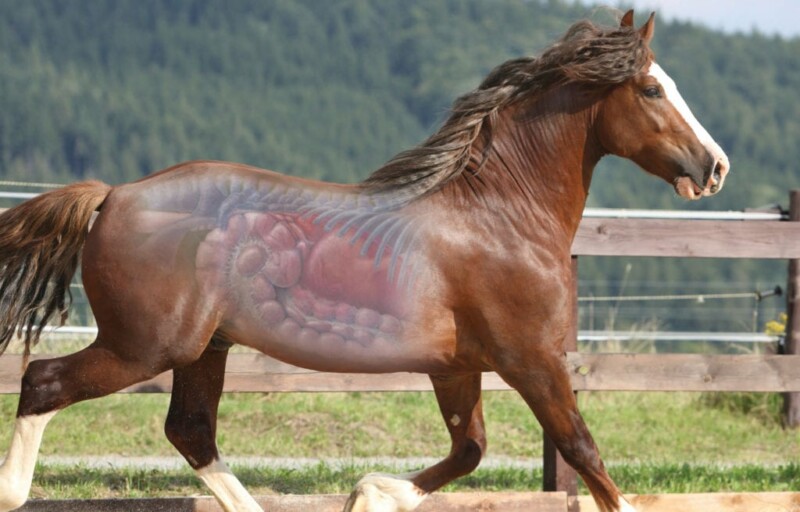
What Is the Horse's Hindgut?
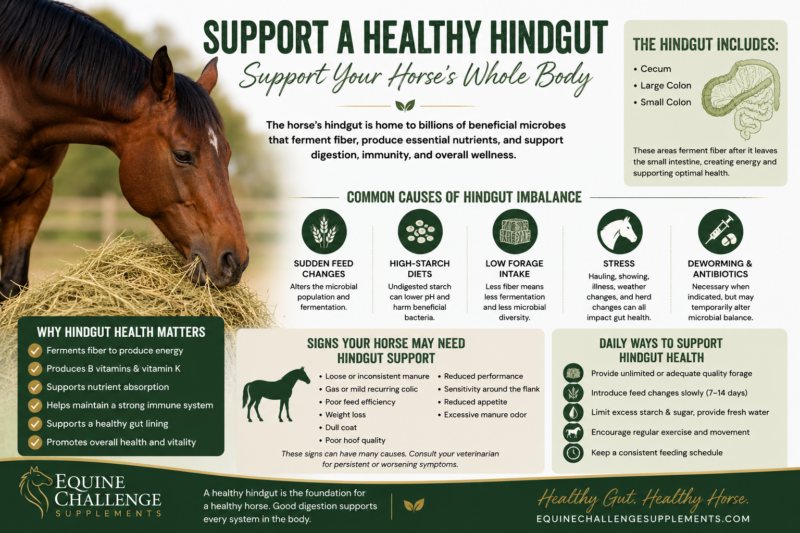
cecum
large colon
small colon
rectum
The horse is a hindgut fermenter, meaning beneficial microorganisms digest fiber after it leaves the stomach and small intestine
billions of bacteria
protozoa
fungi
fermentation
Why the Horse's Hindgut Health Is So Important
The hindgut produces:
volatile fatty acids
B vitamins
vitamin K
energy
Approximately:
60–70% of a horse’s energy can come from hindgut fermentation when consuming forage-based diets.
Healthy hindgut bacteria help:
digest fiber
support immune function
maintain gut lining
compete against harmful bacteria
What Can Disrupt A Horse's Hindgut Health?
Sudden Feed Changes
Changing hay or grain too quickly.
High-Starch Diets
Undigested starch reaching the hindgut can:
lower pH
kill beneficial bacteria
increase lactic acid
increase risk of digestive upset
Low Forage Intake
Too little fiber means:
less fermentation
less saliva
less microbial diversity
Stress
Examples:
hauling
showing
illness
weather changes
herd changes
weaning
Deworming & Antibiotics
Necessary when indicated—but they may temporarily alter the microbial population, making digestive support especially valuable during recovery. This is a great time to add extra probiotics and prebiotics.
Signs Your Horse's Hindgut May Need Support
Loose manure
Manure that changes frequently
Gas
Mild recurring colic
Poor feed efficiency
Weight loss
Dull coat
Poor hoof quality
Reduced performance
Sensitivity around the flank
Reduced appetite
Excessive manure odor
These signs are not unique to hindgut problems and can have many causes. Persistent digestive changes should always be discussed with your veterinarian.
Feeding for a Healthy Hindgut
Unlimited or Adequate Forage
Quality hay should form the foundation of the diet whenever possible.
Slow Feed Changes
Over 7 – 14 days.
Limit Excess Starch and Sugar
Especially in:
easy keepers
insulin resistant horses
horses with metabolic concerns
Plenty of Fresh Water
Hydration is essential.
Regular Exercise
Movement supports normal intestinal motility.
Consistent Feeding Schedule
Microbes appreciate routine.
The Role of Yeast Cultures, Prebiotics & Probiotics
Yeast Cultures
May help create a more favorable fermentation environment.
Prebiotics
Feed beneficial microbes.
Probiotics
Introduce selected beneficial organisms.
Digestive supplements are especially beneficial during:
stress
travel
dietary changes
during/after worming
during/after steroid usage
during/after antibiotics
recovery
senior horses
Can Hindgut Health Affect Hooves?
Poor hindgut function can reduce nutrient availability.
Healthy fermentation supports:
nutrient absorption
microbial vitamin production
overall metabolic health
Hoof growth depends on many factors including nutrition, circulation, genetics, environment, and overall health.
The Bottom Line
A horse’s hindgut health supports far more than digestion. From producing energy through fiber fermentation to helping maintain a balanced microbial population, the hindgut plays a central role in a horse’s overall well-being.
By providing consistent access to quality forage, introducing dietary changes gradually, managing starch intake appropriately, and minimizing unnecessary digestive stress, horse owners can help support one of the most important systems in the equine body.
When digestive health is maintained, horses are often better able to utilize nutrients, support healthy body condition, and maintain overall wellness.
If you’re interested in learning more about equine nutrition and digestive health, explore our growing Equine Challenge Education Library for research-based articles covering hoof health, metabolic health, digestive support, vitamins, minerals, and practical feeding strategies designed to help horse owners make informed nutritional decisions.