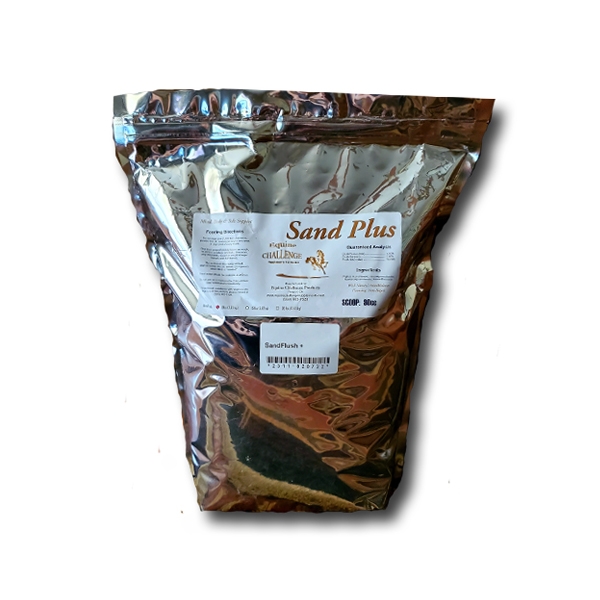
Support healthy digestion with Sand Plus, a premium Psyllium Horse Supplement formulated with 95% pure blonde Plantago ovata and added prebiotics to help maintain a healthy gastrointestinal tract for horses living in sandy environments or exposed to dirt and sand.
Made fresh daily, no fillers added.
*Shipping Included!
* *Alaska & Canada Residents Call For Shipping Info
Monthly Psyllium Supplementation Can Fit Into A Veterinarian-Recommended Management Program.
Good management practices remain just as important as supplementation. Feeding hay in elevated feeders rather than directly on sandy soil, providing plenty of fresh water, maintaining consistent forage intake, and working with your veterinarian can all help reduce the risk of excessive sand ingestion. Psyllium supplementation is commonly incorporated into these programs, particularly for horses living in high-risk regions.
Why Psyllium Is an Important Part of Digestive Health for Horses in Sandy Environments
Horses naturally graze close to the ground, making it nearly impossible to avoid consuming small amounts of dirt and sand while eating. In regions with sandy soils, dry lots, or sparse pasture, that exposure can increase significantly over time. While many horses pass small amounts of sand naturally, some may accumulate enough to irritate the intestinal tract or contribute to digestive problems. Veterinary management often includes reducing sand intake through feeding practices and, when appropriate, supplementing with psyllium under veterinary guidance.
What Makes Sand Plus Different From Other Psyllium Supplements?
Sand Plus was developed to provide high-quality 95% pure blonde Plantago ovata psyllium husk along with prebiotics that support a healthy digestive environment. Unlike tightly compressed pellets that may hydrate more slowly, Sand Plus uses loose psyllium husk designed to readily absorb water and form a natural gel within the digestive tract.
In addition to premium psyllium, Sand Plus includes Fructooligosaccharides (FOS) and Mannanoligosaccharides (MOS). These prebiotics nourish beneficial bacteria already living within the hindgut, helping maintain a balanced digestive microbiome. A healthy hindgut supports efficient fiber fermentation, nutrient utilization, and overall digestive wellness.
Equine Challenge Sand PLUS “blond” pysllium is in granular form which leads to a greater surface area and does not need to be chewed and broken down from the usual pelleted form, which means quicker mucilage action and greater gut support, sooner rather than later.
As with every Equine Challenge supplement, Sand Plus contains premium ingredients with no unnecessary fillers. Our loose, highly pure blonde psyllium provides a quality option for horse owners looking to support digestive health as part of a comprehensive nutritional and management program.
How Does Psyllium Work In THe Horses Digestive System?
Psyllium is a unique soluble fiber that can absorb many times its weight in water. As it hydrates, it forms a gel-like consistency that moves through the intestinal tract. This property is why psyllium has long been included in veterinary protocols for horses living in sandy environments or those with a history of sand accumulation, although research suggests it works best as part of an overall management program rather than as a stand-alone solution.
Sand Plus is especially beneficial for:
Horses kept in dry lots
Horses grazing sandy pastures
Desert and Southwest horses
Horses eating hay directly from sandy ground
Horses with recurring digestive concerns related to sand exposure
Performance horses that benefit from optimal digestive efficiency
Psyllium is a natural soluble fiber derived from Plantago ovata. It is commonly used to support digestive health, particularly for horses living in sandy environments.
Most veterinarians recommend feeding psyllium for approximately one week each month for horses at risk of sand accumulation, although your veterinarian may recommend a different schedule based on your horse’s individual needs.
Loose psyllium hydrates quickly and forms a gel more readily than tightly compressed pellets. Sand Plus uses 95% pure blonde psyllium husk rather than heavily processed pellets.
Yes. Sand Plus combines premium blonde psyllium with FOS and MOS prebiotics to help support a healthy population of beneficial bacteria within the digestive tract.
Horses living on sandy soils, dry lots, desert environments, or those that routinely eat hay from the ground are among the horses most likely to benefit from digestive support with psyllium as part of an overall management plan.
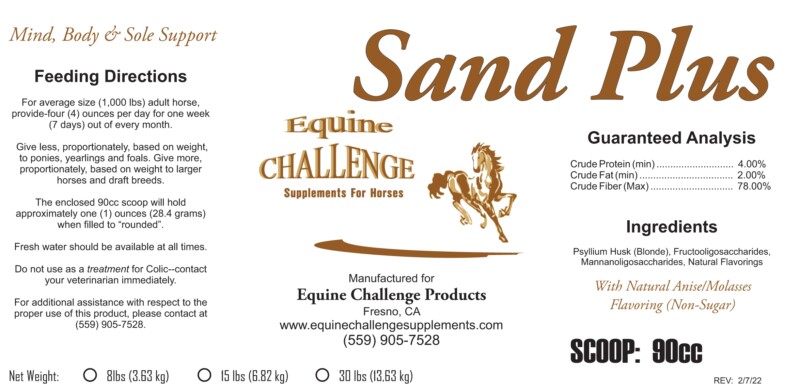
For average size (1,000 lbs) adult horse, provide 2 – 4 ounces per day for one week (7 days) out of every month.
Give less, proportionately, based on weight, to ponies, yearlings and foals. Give more, proportionately, based on weight to larger horses and draft breeds.
The enclosed 90cc scoop will hold approximately one (1) ounces (28.4 grams) when filled to “rounded”. Fresh water should be available at all times.
Generally, the daily dosage will be 2 – 4 ounces, and the product will be fed for 7 days straight. The product is then removed from the diet for three weeks. So, “one week on then three weeks off”… Your local veterinarian may prefer a slight variance to this program.
NOTE: Use Equine Challenge Sand PLUS with the advice, and consent, of your attending veterinarian. Do not feed to horses actively exhibiting signs of colic unless specifically prescribed by the attending veterinarian. Equine Challenge Sand PLUS is not intended for use in treatment of colic. If your horse is exhibiting signs of colic, do not administer this product–call your local, attending veterinarian immediately for treatment.
**For those that have never fed loose psyllium to their horses, know that there is a large volume relative to weight and has more of a “powdery” consistancy. It is suggested that you add a bit of white vinegar or water to the loose blonde psyllium and mix to achieve the desired texture.
Storage: Store in a cool, dry location away from direct sunlight. Keep tightly sealed.