If there is one thing nearly every horse owner wants, it’s a healthy horse that feels good, performs well, and enjoys a long, active life. While exercise, routine veterinary care, and quality forage all play essential roles, nutrition remains the foundation of your horse’s overall health.
Many owners assume that feeding good-quality hay or allowing horses access to pasture automatically provides everything they need. Unfortunately, that’s not always the case.
Today’s horses often rely on hay harvested from soils with varying nutrient levels, and even excellent forage can fall short in key vitamins and trace minerals. Weather, harvesting practices, storage conditions, and regional soil differences all influence the nutritional value of forage. As a result, many horses may not receive optimal levels of essential nutrients through forage alone.
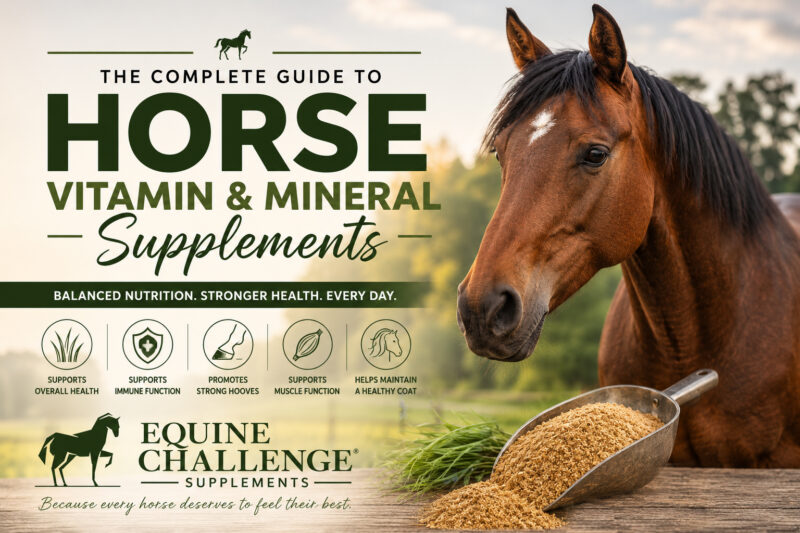
A well-balanced vitamin and mineral supplement helps bridge these nutritional gaps by supplying the nutrients that support normal body functions every day. Rather than replacing forage, supplements are designed to complement it, helping provide a more complete and balanced diet.
Whether your horse is a competitive athlete, a weekend trail partner, a broodmare, a growing youngster, or a retired companion, balanced nutrition contributes to overall wellness and helps support healthy body systems throughout every stage of life.
Think of vitamins and minerals as your horse’s internal maintenance crew. Although they are needed in relatively small amounts compared to protein, fiber, and energy, they participate in hundreds of essential processes throughout the body.
These nutrients help support:
Without adequate vitamins and minerals, many of these systems cannot function as efficiently as they should. Deficiencies may develop gradually, making them difficult to recognize until more noticeable changes occur.
Vitamin and mineral deficiencies don’t always appear overnight. In many cases, subtle changes develop over weeks or months. While these signs can have many possible causes and should always be discussed with your veterinarian, nutritional imbalances may contribute to:
It’s important to remember that these signs are not unique to vitamin or mineral deficiencies. Illness, dental issues, parasites, metabolic conditions, and other health concerns can produce similar symptoms. A veterinarian can help determine the underlying cause and whether dietary adjustments are appropriate.
Hay forms the foundation of most equine diets, and high-quality forage should always come first. However, hay quality varies significantly from one field to another and even from one cutting to the next.
Factors that influence nutrient content include:
For example, vitamin A levels naturally decline during hay storage. Trace mineral levels can also differ widely depending on where the forage was grown. This means two horses eating the same amount of hay may still receive very different nutrient profiles if their forage comes from different regions.
Forage testing is one of the best ways to understand what your horse is consuming. When testing isn’t available, a well-formulated vitamin and mineral supplement can help provide consistent nutritional support alongside a forage-first feeding program.
No single supplement is ideal for every horse. Nutrient requirements vary depending on factors such as:
For example:
At Equine Challenge Supplements, we recognize that nutrition isn’t one-size-fits-all. That’s why we offer several vitamin and mineral formulations designed to complement different forage types and regional feeding situations. Selecting the right formula starts with understanding your horse’s diet, not simply choosing the most popular supplement.
Before purchasing any supplement, ask yourself a few important questions:
✔ What type of hay does my horse eat?
✔ Does my horse have access to pasture?
✔ Is my horse receiving grain or a ration balancer?
✔ What is my horse’s age?
✔ How often is my horse exercised?
✔ Do I know the mineral content of my forage?
These answers provide the foundation for making an informed decision.
Forage should always make up the majority of a horse’s diet. Supplements are designed to complement—not replace—a forage-based feeding program.
Different forage types naturally contain different nutrient profiles.
Grass hay is an excellent source of fiber and can support digestive health, but its vitamin and mineral content varies depending on species, maturity, harvest timing, and soil conditions. Many horse owners choose a balanced vitamin and mineral supplement formulated to complement grass-based diets.
Recommended Equine Challenge Solution:
Mind, Body & Sole All In One Ration Balancer – Grass Formula
Ration Balancer Essential Daily Vitamins & Minerals – Grass Formula
Alfalfa is naturally rich in protein and calcium. Because its nutrient profile differs from grass hay, many horse owners prefer supplements formulated specifically for alfalfa-based diets to help maintain overall nutritional balance.
Recommended Equine Challenge Solution:
Mind, Body & Sole All In One Ration Balancer – Alfalfa Formula
Ration Balancer Essential Daily Vitamins & Minerals – Alfalfa Formula
Climate and soil conditions in the Southwest influence the nutrients available in pasture and hay. Some areas naturally produce forage with different mineral profiles than others, making region-specific supplementation beneficial for many horses.
Recommended Equine Challenge Solution:
Southwest Ration Balancer Essential Daily Vitamins & Minerals – Grass Formula
Southwest Ration Balancer Essential Daily Vitamins & Minerals – Alfalfa Formula
Selenium is an essential trace mineral, but requirements vary depending on regional soil levels and the horse’s overall diet. In areas where forage already contains adequate selenium—or when another feed source already supplies selenium—a no-added-selenium supplement may be the preferred choice.
Always consult your veterinarian or equine nutritionist if you’re unsure about your horse’s selenium intake.
Recommended Equine Challenge Solution:
No Selenium Added Ration Balancer Essential Daily Vitamins & Minerals – Grass Formula
No Selenium Added Ration Balancer Essential Daily Vitamins & Minerals – Alfalfa Formula
No Flax – No Selenium Ration Balancer Essential Daily Vitamins & Minerals – Grass Formula
Growing Horses
Young horses require balanced nutrition to support healthy growth and development. Protein, calcium, phosphorus, copper, zinc, and other trace minerals all contribute to normal skeletal development.
Rapid growth should never be encouraged by excessive supplementation. Balanced nutrition is far more important than simply increasing nutrient levels.
Adult Pleasure Horses
Many adult horses in light work thrive on quality forage paired with a daily vitamin and mineral supplement designed to fill common nutritional gaps.
Maintaining consistency often provides better long-term results than frequently changing supplements.
Performance Horses
Athletic horses have increased nutritional demands due to exercise, muscle recovery, and sweat losses. While forage remains the dietary foundation, many performance horses benefit from carefully balanced vitamin and mineral support as part of an overall feeding program.
Senior Horses
As horses age, dental wear, changes in digestion, and reduced feed efficiency can make balanced nutrition increasingly important. Senior horses may benefit from diets that are easy to chew, highly digestible, and nutritionally complete.
Even experienced horse owners can accidentally create nutritional imbalances by combining multiple products without evaluating the overall diet.
Feeding Multiple Vitamin Supplements
More is not always better.
Several supplements may contain the same vitamins and minerals, potentially resulting in unnecessary overlap. Before adding another product, compare ingredient labels and feeding directions.
Ignoring Forage Quality
The hay your horse consumes every day contributes far more to the overall diet than most supplements.
Whenever possible, consider having your hay analyzed. A forage analysis provides valuable information that can help determine whether additional supplementation is needed.
Assuming Grain Provides Complete Nutrition
Bagged commercial feeds vary widely in their vitamin and mineral content and are usually packed with byproduct waste and mineral types not easily absorbed by the horse. Horses consuming only small amounts of grain may not receive the full intended nutrient levels listed on the feed tag.
Reading feeding recommendations carefully can help determine whether additional vitamin and mineral support may be appropriate.
Frequently Changing Supplements
Nutritional programs work best when given time to support normal body functions.
Changing supplements every few weeks makes it difficult to evaluate whether a feeding program is meeting your horse’s needs.
Consistency, combined with proper forage management and regular veterinary care, generally provides the best long-term results.
What to Look for in a Quality Horse Vitamin and Mineral Supplement
When comparing products, consider these important factors:
✔ Formulated to complement your horse’s forage
✔ Balanced vitamin and mineral profile
✔ Appropriate trace mineral levels
✔ Clearly labeled ingredients
✔ Does not contain fillers and byproduct waste
✔ Easy daily feeding directions
✔ Manufactured with quality, bioavailable ingredients
✔ Suitable for your horse’s age and activity level
Remember, no single supplement is ideal for every horse. The goal is to choose a product that supports your horse’s existing diet rather than trying to replace good nutrition.
At Equine Challenge Supplements, we believe that excellent nutrition begins with quality forage. Our Daily Vitamins & Minerals formulas are designed to complement different feeding programs, recognizing that horses eating grass hay, alfalfa, or region-specific forage often have different nutritional considerations.
Instead of offering a one-size-fits-all vitamin supplement, we’ve developed multiple formulations to help horse owners choose a product that aligns with their horse’s diet and feeding situation.
Whether your horse is a trail companion, a performance athlete, a breeding horse, or a beloved retiree, selecting the right nutritional foundation starts with understanding what is already in the feed bucket.
All In One Ration Balancers
Daily Vitamin and Mineral Ration Balancers
Grass Hay
Alfalfa Based Diet
Southwest Forage
High Selenium Already In Diet
Mixed Forage Or Unsure
High Selenium Already In Diet/Flax Allergies
Looking For An All -In-One Solution
Share With Your Friends!